

The most significant difference lies in the cathode. However, major players are actively developing sodium-based alternatives to NMC (nickel manganese cobalt) and LFP (lithium iron phosphate) lithium-ion batteries, according to the new IDTechEx report, “Sodium-Ion Batteries 2025–2035: Technology, Players, Markets, and Forecasts.” The three main types of sodium-ion cathodes under development are transition metal oxides (similar to NMC), polyanions (similar to LFP), and Prussian blue analogs (unique to sodium-ion).
Transition metal oxides and Prussian blue analogues are particularly promising due to their low cost and the fact that they avoid rare earth elements. Transition metal oxides, typically composed of sodium, oxygen, nickel, iron, and manganese, exclude cobalt, thus addressing the sustainability issues that have plagued lithium-ion batteries. Prussian blue analogues, with their rhombohedral structure, consist solely of sodium, iron, carbon, and nitrogen, making them unique in sodium-ion technology.
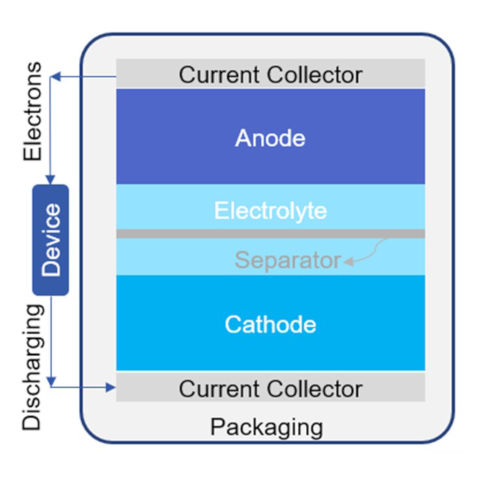
In terms of the anode and electrolyte, sodium-ion batteries are very similar to lithium-ion batteries. Hard carbon anodes, used in earlier generations of lithium-ion batteries, are the preferred choice, as sodium ions are too large to intercalate into graphite. The electrolytes consist of similar salts and solvents, with sodium instead of lithium, such as NaPF6 in a carbonate solvent.

Comparison of sodium ions with other cellular chemistries. Source: IDTechEx
Comparing the different performance characteristics reveals the general advantages and disadvantages of each battery chemistry. The energy density of sodium-ion batteries remains lower than that of high-energy lithium-ion cells, which use nickel, but they are approaching the energy density of high-power lithium iron phosphate (LFP) cells. Cell life is reasonable in some configurations, but one interesting aspect not shown in the image is that sodium-ion batteries can have quite high power characteristics, with reports of ~1000 W/kg, which is higher than NMC (~340-420 W/kg) and LFP (~175-425 W/kg) cells. They also exhibit better low-temperature performance.
Cost competitiveness in a changing market
One of the main advantages of sodium-ion batteries is their potential for cost reduction compared to lithium-ion technologies. At large scale, a sodium-ion battery with a layered metal oxide cathode and a hard carbon anode is expected to have material costs approximately 25–30% lower than those of a lithium iron phosphate (LFP) battery. This cost reduction is primarily due to the substitution of lithium and copper with the more affordable sodium and aluminum, resulting in a cost reduction of around 12%, largely due to the use of aluminum as the current collector.
However, the cost structure is influenced by several factors. The main cost drivers of any battery are the electrode materials, and hard carbon is emerging as the primary anode material for sodium-ion batteries. While hard carbon offers a cost advantage over graphite, it has a lower density, meaning more electrolyte is needed for the same amount of active material, increasing both cost and mass. Furthermore, hard carbon tends to be more expensive than natural graphite, and certain variants exhibit inferior performance.
The future of sodium-ion batteries and their potential to undercut lithium-ion batteries remains a hotly debated topic. While the cost of lithium-ion batteries continues to fall, the timeframe for sodium-ion technology to match or surpass these prices remains uncertain. IDTechEx believes that engineering advancements, rather than simply increasing production, will be key to reducing sodium-ion battery costs.
If lithium prices remain near historic lows, sodium-ion batteries face a narrower path to becoming cost-competitive over the next decade. However, with continued engineering advancements, sodium-ion batteries could emerge as a complementary technology, offering value in specific applications where cost reduction and material availability are paramount.
Author: Shazan Siddiqi, Senior Technology Analyst at IDTechEx