

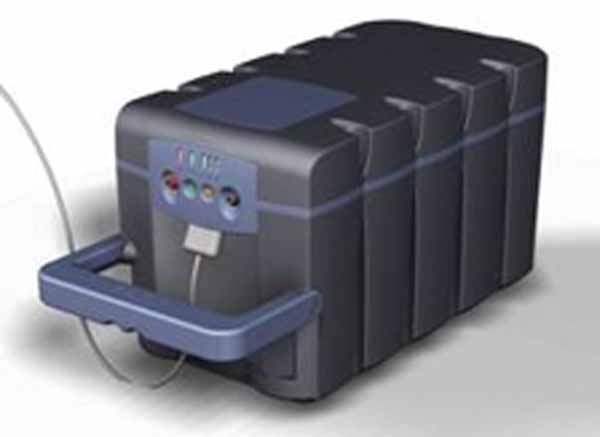
Saft has extensive practical experience in the telecommunications industry as a key supplier of battery systems for a wide range of network backup power applications, including fixed-line, mobile, and cable telephony. Saft also has a significant track record in supplying Li-ion battery systems for demanding applications such as those in the automotive and aerospace sectors.
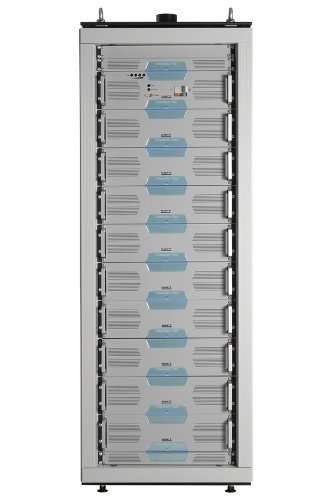
Saft has applied this experience to the development of Evolution, which offers a unique combination of load capacity and high cycleability performance for telecom network installations.
The main characteristics of Li-ion technology for telecommunications are: a compact design with high energy storage capacity and weight savings, high efficiency, long operating life (even under extreme temperatures), zero maintenance requirements, and environmental friendliness. Evolion Li-ion technology will be of particular interest to the three main types of telecommunications installations: outdoor network sites, isolated sites, and DPCO (Power Distribution Center) systems.
Installations such as base transceiver stations (BTS), outside plant cable (WOP), and fiber optic node units (ONUs) require a backup battery system in case of a power outage. Evolion offers a particular advantage in locations where space is limited, as its high energy capacity means it requires only half the space of conventional VRLA batteries. Another important advantage of Li-ion technology for remote installations is its maintenance-free design, which includes an intelligent remote monitoring system, eliminating the need for routine site visits.
In isolated locations, the primary power source is typically a generator, a photovoltaic (PV) system, or a wind turbine, or some combination thereof. The battery's role is to enable efficient energy storage. The main benefit of using Evoluion is its high cycle life and long lifespan, especially at elevated temperatures. Furthermore, lithium-ion technology offers easy battery management.
Saft's lightweight Li-ion technology enables specialized equipment to address the challenges of peak load requirements at central workstations. This makes it possible to install battery racks in the same room as telecommunications equipment, even on uneven floors.