
 Asparagus picking-1-w.jpg)
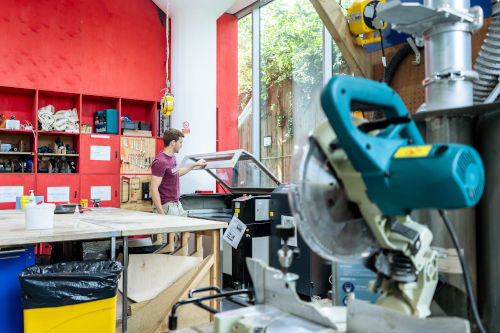
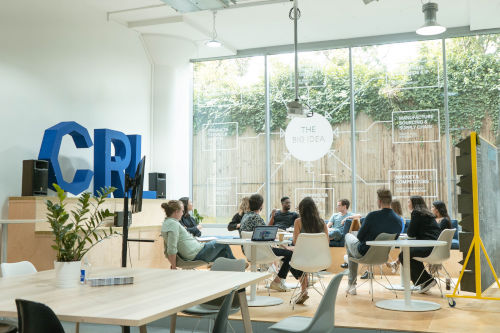
It is currently home to the Central Research Lab (CRL), a space dedicated to technology coworking and a hardware design accelerator. Startups—which typically work with a wide range of technologies, from agritech to building materials—benefit from a six-month program that fosters business acceleration. Innovators receive support to turn a product idea into a solid business plan, secure funding, and produce a prototype. Committed to supporting innovation long-term, Mouser has partnered with CRL and provides funding, innovation support, and access to a network of technical expertise from leading electronics component suppliers.
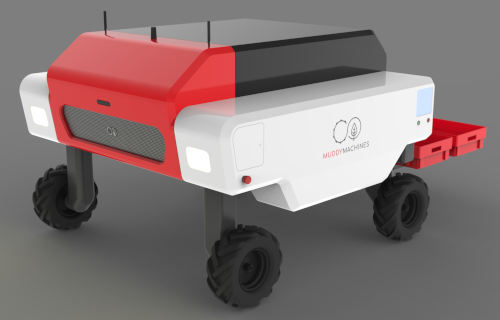
Muddy Machines is one of the startups that has benefited from the CRL acceleration program. The company is creating innovative agricultural robots to help combat the UK's harvesting labor shortage. The need arose from a lack of asparagus pickers in the UK, although this problem also affects many other crops in numerous countries worldwide, making its applications countless.
 Capturing the Key Moment
: They say everyone has an inventor inside them. Have you ever found a gap in the market, searched for something that doesn't yet exist? Bringing that idea to life, developing it, and launching it is a huge challenge, so it's no wonder that only a small fraction of ideas ever make it to market. Developing a business idea into a prototype, and then building a company to produce, market, and sell it, requires numerous skills—more than one person typically possesses.
For Muddy Machines' CEO and co-founder, Florian Richter, the desire to innovate began when his family bought a dilapidated farm in Portugal. After witnessing the transformation that took place over the years, the potential value that modern technologies could bring to agriculture sparked Florian's enthusiasm. At that point in his career, Florian had acquired considerable commercial experience, but lacked technical expertise. However, fate changed his course when he met Chris Chavasse at Entrepreneur First (an event for entrepreneurs) in London. Chris, co-founder and technical director, had dedicated his career to developing robotic systems and shared Florian's vision for agriculture. And so Muddy Machines was born.
 their first steps in agrotechnology,
spending time researching the agricultural business to identify challenges that technology could solve. After numerous phone conversations with livestock farmers, horticultural producers, and crop farmers, it became clear that a reliable source of labor was paramount for many agricultural businesses. A chance encounter with the UK's largest asparagus grower highlighted the considerable challenges of selective harvesting. Certain crops require harvesters to be selective in their picking method, harvesting only the parts of the product that are ready to be picked and allowing the rest to continue growing, making the use of large machinery impractical. In the UK, asparagus harvesting is an intensive and selective process. With a relatively short harvesting period—generally just 12 weeks—a large number of people must continuously traverse the same fields to monitor the crop. Like all outdoor crops, asparagus yields are subject to weather variations, which poses a challenge in securing labor.
Florian and Chris decided to focus their innovative efforts on designing a robot capable of harvesting asparagus. From a robotics perspective, harvesting asparagus is relatively straightforward, as the shoots are not surrounded by leaves. The stalks emerge vertically from the ground and are grown in rows within furrows that are accessible to robots.
They worked in Chris's apartment, 3D-printed asparagus stalks, and built several prototype four-wheeled robots using hobbyist components. Initially, the technical aspects focused on the robot's battery-powered drivetrain and a four-axis harvesting mechanism. Later, they incorporated a 3D camera and a machine-learning algorithm to detect the stalks and determine their maturity. Chris and Florian realized they needed funding to further develop their idea and a simple prototype to explain the basics to potential investors. They also concluded that the harvesting robot they were developing would have applications in other crops, expanding its potential market.
They continued developing the prototype and, with the help of their asparagus grower, gained access to fields to experience firsthand the physical challenges the robot would face. The furrows were more uneven than they had anticipated, and the access tracks were often washed away during heavy rainfall.
It became increasingly clear that they needed greater technical and business expertise to maintain the momentum Florian and Chris had built with Muddy Machines.
Muddy Machines enrolled in a CRL accelerator program, and since Chris's apartment was no longer sufficient, they moved to Hayes' startup incubator.
 Muddy Machines' Advancements at the CRL:
Thanks to the engineering expertise available at the CRL, they advanced their robot prototype using a neural network algorithm for cane identification, a single-board computer capable of running all applications, improved energy management, and an electric powertrain. Battery life was extended from one to 16 hours, although the weight of the entire payload was a limiting factor for the batteries. They focused their efforts on achieving a low-speed, high-torque powertrain that could handle uneven terrain.
As the robot prototypes were field-tested, the founders considered how to market the harvesting machines. Instead of selling them directly, they decided to provide the robots as a service, with payment based on a per-kilogram fee for the harvested product. This closely resembled their existing cost structure, making a service contract more appealing. For Muddy Machines, this had the added advantage that, once the asparagus harvest was over, they could repurpose the machines for harvesting other seasonal crops. In this way, the robots are used continuously and generate revenue throughout the various harvest seasons.
Looking ahead, the CRL team continued to contribute to planning meetings throughout product development and provided business support services when needed. Florian, CEO and co-founder of Muddy Machines, notes, “Working with the CRL made us feel like a larger organization than we were, with a team of specialists and experts at our disposal.” Despite the ongoing component supply issues facing the entire electronics industry, Muddy Machines plans to deploy harvesting robots in the upcoming asparagus season. They are also collaborating with growers to leverage the valuable insights generated during the harvesting process, such as yield forecasting, plant health, and phenotyping. Muddy Machines is just one of the startups benefiting from the CRL accelerator program, but readers will find examples of other companies here . Mouser's partnership with the CRL is a mutually beneficial relationship. Startups benefit from Mouser's electronics support and expertise, while Mouser gains insight into innovation, keeping abreast of emerging technologies and business challenges that will impact customers and sales worldwide. Collaborative environments like this offer a regenerative solution to engineering challenges by fostering team innovation.